The field collection / Observed conditions
What the photographs show.
Original field images from the company’s collection, with observations tied to what is visible in each photograph.
Visible conditions / Original field photographs
Read the condition.
Then define the work.
These photographs from the company’s existing field collection show fire-affected interiors and areas with building materials exposed. Each caption describes what is visible. They are examples of the conditions that can inform a remediation discussion, with the scope for each property agreed separately.
Select a photograph to view it larger.
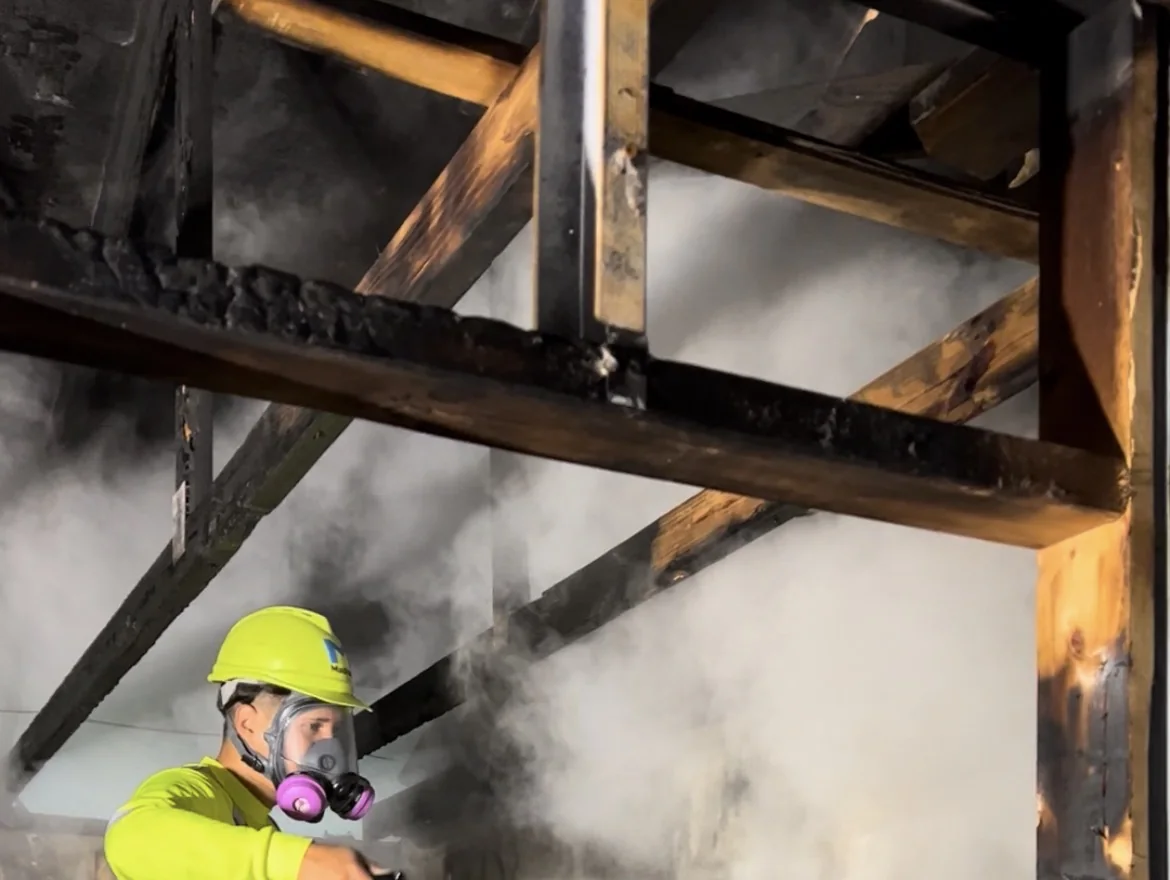
Visible charring and surface patterns
The photograph shows exposed framing with charred areas and dark patterns on surrounding surfaces. These visible conditions can be documented for the remediation discussion. A photograph alone does not establish structural capacity or an engineering conclusion.
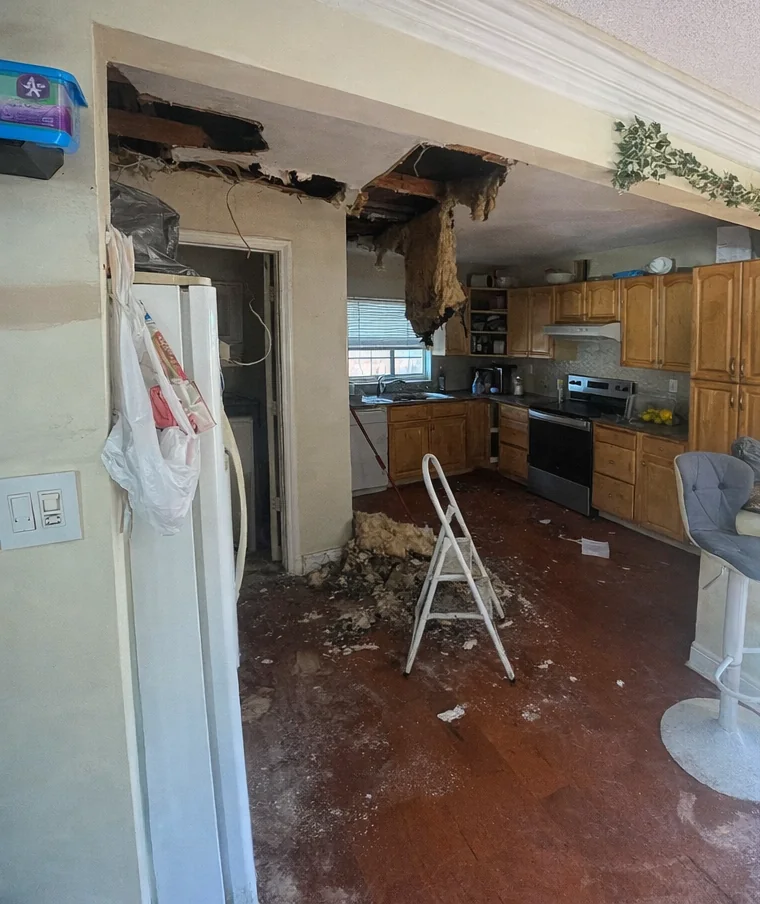
Ceiling openings and debris
This wider kitchen view shows the ceiling openings in relation to the doorway, cabinetry and floor. A room view provides context for closer photographs and helps identify the area being discussed.
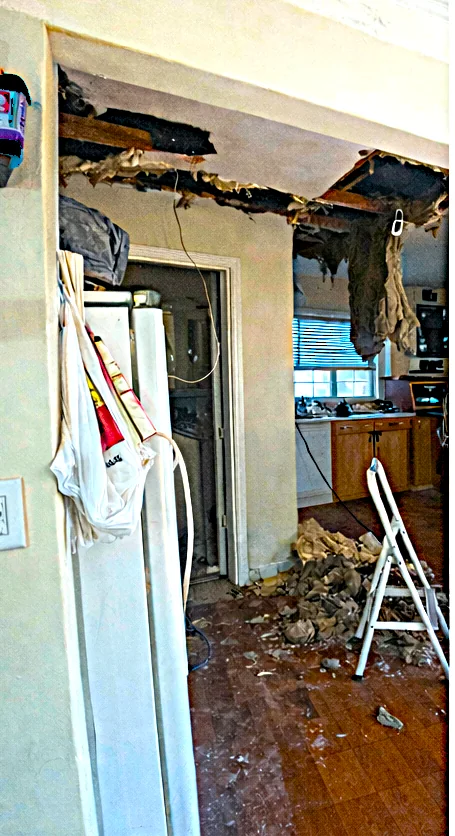
Documenting the affected area
A closer view shows the edges of ceiling openings and material below them. Written area notes can connect a photograph like this with the proposed cleaning or removal tasks in a scope.
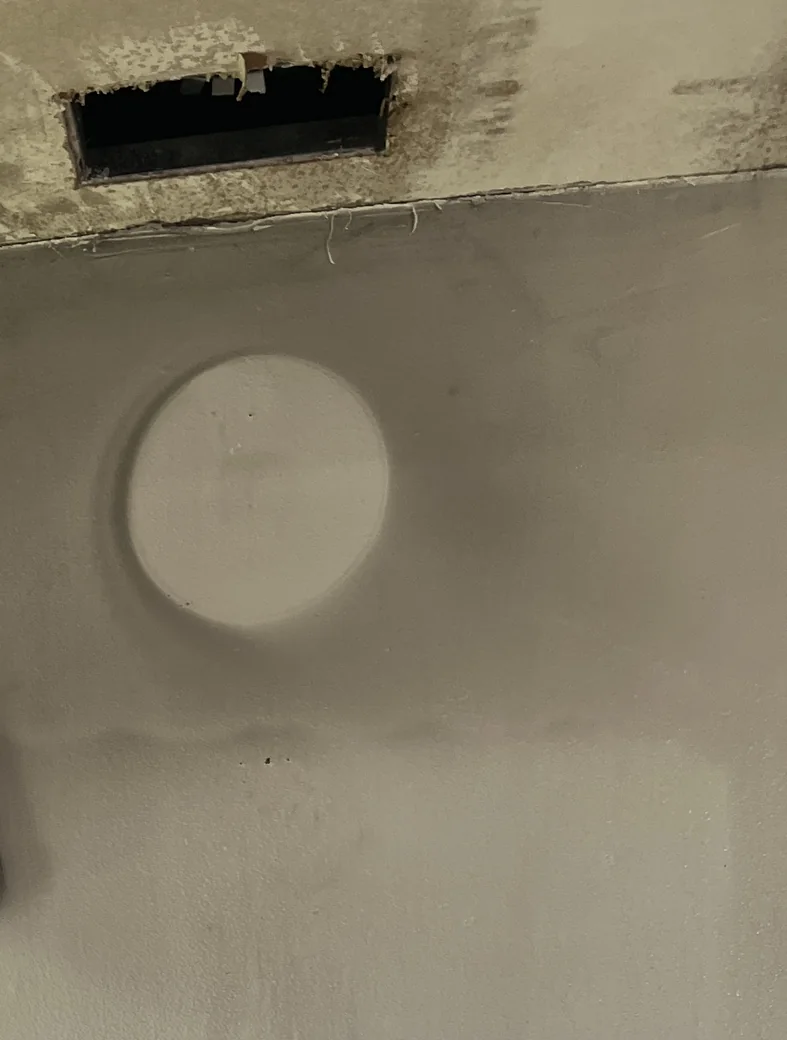
Record the visible pattern
The photograph shows uneven dark surface patterns near a ceiling opening. Appearance can be recorded, but it does not establish a residue’s composition or a laboratory finding. Questions about composition may need an appropriate specialist.
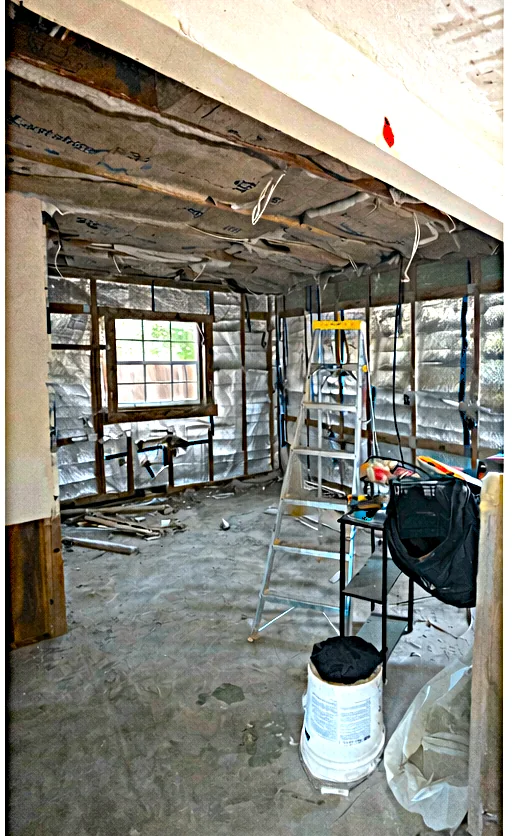
After selective material removal
Wall and ceiling materials have been removed, exposing framing and insulation. The image records a visible stage of work. It does not establish which repairs remain or confirm a completed project outcome.